Abstract: The new paradigm of the Internet of Things (IoT) as well as the 5G and 6G technology requires the implementation of miniaturized, low cost, reconfigurable, and eco-friendly components. Since many years the Microwave Laboratory of the University of Pavia is working to develop new technologies and to exploit new materials, as well as to develop new concepts and topologies for miniaturized and reconfigurable circuits. In particular, the presentation will be focused on new components exploiting the Substrate Integrated Waveguide concept, conformal and wearable antennas, microfluidic sensors, graphene-based reconfigurable devices. Experimental results will demonstrate the feasibility of these components using traditional materials as well as paper and textile. Finally, manufacturing by using both the milling machining technique and the new 3D-printing approach will be reported.
Date:2026.08.01 10:20-11:05
Venue:Room 1434, Information Building, Jiulonghu Campus
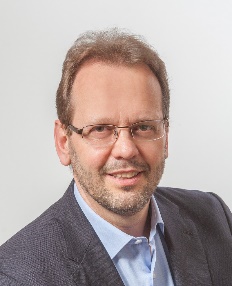
Luca Perregrini (M'97–SM'12–F'16) was born in Sondrio, Italy, in 1964. He received the Laurea degree in Electronic Engineering in 1989 and the Ph.D. degree in Electronics and Computer Science in 1993 from the University of Pavia, Pavia, Italy.
Since 1992, he has been with the Faculty of Engineering at the University of Pavia, where he is currently Full Professor of Electromagnetic Fields and Dean of the Faculty of Engineering. He was a Visiting Professor at École Polytechnique de Montréal, Canada, in 2001, 2002, 2005, and 2006. Throughout his career, he has led numerous research projects and industrial collaborations with leading international research centers and companies.
Prof. Perregrini has authored or coauthored more than 110 journal papers and over 300 conference papers, as well as six book chapters and two textbooks. He also co-edited the book Periodic Structures (Research Signpost, 2006). His research interests include computational electromagnetics, numerical methods for electromagnetic analysis, microwave components, antennas, and industrial and biomedical microwave applications.
Prof. Perregrini served on the Board of Directors of the European Microwave Association (EuMA) from 2016 to 2025 and was a member of the EuMA General Assembly from 2011 to 2013. He has served on numerous conference and society award committees and is a member of the IEEE Microwave Theory and Techniques Society (MTT-S) Technical Committee MTT-1 on Microwave Field Theory. He also chaired the IEEE MTT-S Fellow Evaluation Committee.
He has received several Best Paper Awards at international conferences and has held major leadership roles in the microwave community, including General Chair of the European Microwave Week 2022 (Milan, Italy). He also served as Technical Program Committee Chair for the IEEE MTT-S International Conference on Numerical Electromagnetic Modeling and Optimization (NEMO 2014, Pavia, Italy), the European Microwave Conference (EuMC 2014, Rome, Italy), and the IEEE International Microwave Workshop Series on Advanced Materials and Processes (IMWS-AMP 2017, Pavia, Italy).
Prof. Perregrini has held several editorial positions, including Associate Editor of IEEE Microwave and Wireless Components Letters (2010–2013), IEEE Transactions on Microwave Theory and Techniques (2013–2016), the International Journal of Microwave and Wireless Technologies (2011–2016), and Electronics Letters (2015–2016). He was Guest Editor of IEEE Transactions on Microwave Theory and Techniques and the International Journal of Microwave and Wireless Technologies in 2015. From 2017 to 2019, he served as Editor-in-Chief of IEEE Transactions on Microwave Theory and Techniques. He has delivered numerous invited keynote lectures, conference presentations, and seminars at universities and research institutions worldwide.